A Greek Island Murder Mystery, a CIA Spy Thriller, and Costa Rica Travel Tales
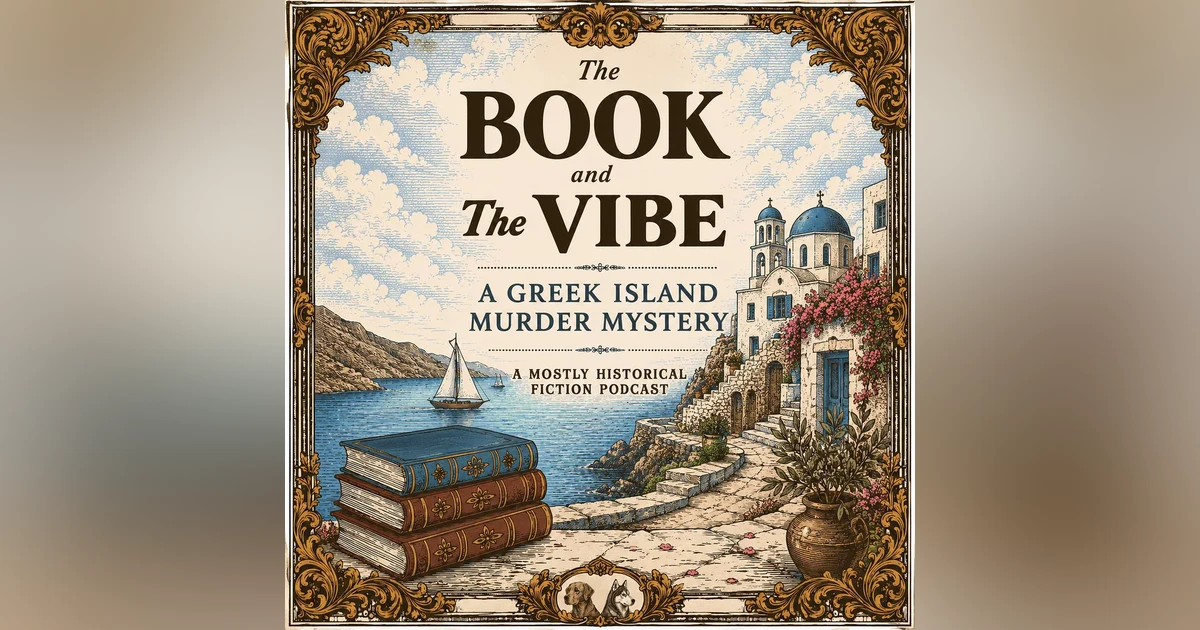

Send us Fan Mail In this episode, first we have our spoiler-free review of The Final Problem by Arturo Pérez-Reverte — an updated yet Golden Age styled, locked room murder mystery set on a Greek island in 1960, starring an aging actor forever shadowed by his most famous role: playing Sherlock Holmes on screen. From there, we head into Unearthed, where we look at the real man behind that shadow — actor Basil Rathbone, and his true story of heroism as a WWI intelligence officer. Then it's...


 YouTube
 In this episode, first we have our spoiler-free review of The Final Problem by Arturo Pérez-Reverte — an updated yet Golden Age styled, locked room murder mystery set on a Greek island in 1960, starring an aging actor forever shadowed by his most famous role: playing Sherlock Holmes on screen.
From there, we head into Unearthed, where we look at the real man behind that shadow — actor Basil Rathbone, and his true story of heroism as a WWI intelligence officer.
Then it's over to The Tavern for a bonus review of David McCloskey's CIA spy thriller, Moscow X — a fast-paced operation that crosses Moscow, London, and a Mexican horse ranch.
We close things out on Notes from the Road with a trip to Costa Rica: a hillside retreat with a pool overlooking the sea, a jungle stay near Arenal Volcano, and the strangest bird call you'll ever hear.
Costa Rica Hotel where we stayed near Arenal, with the amazing variety of birds, including the Montezuma oropendola - https://www.villadecary.com/
Please like and follow the show!
- You can support the show - and independent bookstores everywhere - by buying the books from the show bookshop:
- https://bookshop.org/shop/thebookandthevibe
- Social:
- Facebook and Instagram @thebookandthevibe
- Contact:
- email = thebookandthevibe@gmail.com
- website = https://www.thebookandthevibe.com/
Welcome to the Book and the Vibe, a mostly historical fiction podcast. I'm your host, Helen Cabay, and I recently traded my 9-5 for books, travel, and the places that stories take us. I live near Richmond, Virginia, and I say mostly historical fiction this week, because today's bonus review in the back half of the show is not historical fiction at all. But it's a genre I've started picking up quite often the past few months. Last week, we were in Great Britain during the Dark Ages with one foot in the world of legend. This week, we're somewhere a whole heck of a lot sunnier and more glamorous, but with suspicion hanging heavy in the air. Do you reach for historical fiction often, but maybe not exclusively, and want to know exactly what kind of world you will inhabit inside your next book? If so, you're in the right place. We're about spoiler-free book reviews for readers who yearn to explore the places and times they read about. Let me start by telling you today that in the main review, we're going to the sunny Mediterranean, and we're doing it island style. We'll also unearth some real-world heroism from one of Hollywood's golden age actors, a man who undoubtedly set the modern screen standard for one of the most enduring and beloved characters of the last two centuries. And after that, we'll serve up a bonus review in the tavern today, one that has us crisscrossing between London, wintry Russia, and an exclusive horse ranch in Mexico. So choose either a Scotch on the rocks or an ice-cold, dry, crisp white wine. Imagine a whitewashed seaside hotel on a sunny island, and let's talk about The Final Problem by Arturo Perez Reverte, translated into English from the original Spanish by Francis Riddle. Our setting is a little Greek island near the larger island of Corfu in the year 1960 and where the aftermath of World War II still looms large alongside the rich and famous who are doing their best to try and forget it. The first thing you'll want to know is that this book is, first and foremost, a nod to golden age mysteries and glamorous old movies. It's also my favorite kind of Who Done It, a locked room mystery. Or really, in this case, more of a locked island mystery. The final problem feels classic in all the right ways, but the prose and dialogue have been modernized quite elegantly for us without losing the nostalgia and the big screen feel of the stories that it's clearly honoring. So here's the setup of the book. We are in a small hotel with a limited number of guests, rough weather is all around, and a giant storm essentially cuts the island off from the outside world. But as luck would have it, the island itself sits in the eye of the storm. So while no one can leave, the story plays out under sunny, almost two perfect skies. Our main character is Ormond Basil, a classically trained actor who is past his prime and highly recognizable, but is not exactly in demand in the industry anymore. The thing is, Basil spent most of his career playing Sherlock Holmes on the big screen in various adaptations of the books. Basil embraces and resents this in equal measure, which makes for some great entertainment. He has become typecast and cannot escape the shadow of his most famous role. So when the inevitable murder occurs and Basil and his yacht companions are stranded at the hotel with everyone else, the guests look around and more or less decide that the actor who played Sherlock Holmes, our Basil, is the best option they have on hand to look into things until help can arrive. Is this a good idea or not? You honestly go back and forth on that question, and you really never get a solid answer until the last chapter. And this not knowing if he's the man for the job or not is part of the fun. The tension is funny, yes, but it also drives some uncomfortable moments as the guests vacillate in their feelings about Basil as well. The story is told in first person from Basil's point of view. And from an overall plot perspective, what I just shared is really all you need to know going into this. The setup I know is specific enough that readers with a fondness for Sherlock Holmes and Golden Age mysteries will definitely be salivating already, as I was. But I think really anyone who likes mysteries or the feeling of being behind the scenes of old Hollywood will find something to like here. The violence is mostly off-page, very much in keeping with the Golden Age mystery feel. And I found this book at Parnassus Books in my old neighborhood of Green Hills in Nashville, Tennessee. I grew up in Nashville and I was back there recently for my parents' celebration of life. They both passed away recently in what was a tough year to say the least. And, you know, just thank goodness for books and travel these past few months and also for my husband, who is not minded while I really immerse myself in those things lately as I process everything. But in Nashville, I knew of Parnassus Bookstore, which I knew was owned by the author Ann Patchett. And I knew it was walking distance from our hotel. So I ducked over during some downtime. And in this instance, going to a bookstore was really the balm my soul really needed for an hour or so. So I wandered to the mystery section and saw a shelf talker for a book I wanted, but they did not have that book on the shelf that day. And if you don't know what a shelf talker is, it's where the staffer owner writes a note about why they liked a particular book and slaps it on the shelf right next to the book. To me, it's one of the real joys of shopping for books in person at an independent bookstore. And the final problem was sitting right where that shelf talker should have been. And I naturally started with judging it by the cover, which is a striking contrast of gorgeous blue, red, and white. It is clearly a sunny, upscale vacation destination, but it's also clearly a murder mystery. And the artwork tells us this going in and that it's going to be set mid-century. I love this cover so much that I would absolutely hang a poster of it in my house. At that time, I did not notice that it was written by the author of the Club Dumas. I realized it was the same author after I got back to Richmond and decided I would pick it up. And I will admit that realization gave me a little pause because I struggled a little with the Club Dumas. I took a moment to look up the translator for the Club Dumas because I wondered if that might have been part of why it didn't work for me. And it was a different translator for the final problem. So my hopes rose a little. I was 100% engaged from the first page because it opens with Basil, our Hollywood golden age actor, strolling the streets of Genoa, Italy, where he vacations every year because he really likes their hats. And while out shopping one sunny day, he runs into a movie producer and the producer's seasoned but still fabulous actress girlfriend, and they invite him to sail on their yacht for a few days to talk about a new movie role for Basil. I mean, what's not to love about that opener? Fun History Fact Alert, Genoa, located on Italy's northwest coast, is the birthplace of Christopher Columbus. Yay, so now you know. As they're sailing, Basil and his friends find their way to the island, and the mystery takes off from there. But the story is nuanced far beyond just the mystery for layers and layers of enjoyment. You can peel through like an onion. The dialogue and themes are definitely meant to be intellectual, and at times they are almost scholarly, but they stop short of getting in the way of any casual mystery readers and their enjoyment. This book is perfect to read any time of year. But if we're indulging our fantasy, I think it would be especially delicious to read it in a library with a scotch, or of course, overlooking a body of water with a cold white wine. The themes of the book include ruminations on why we defer to certain people in our lives, what do we owe or what do we not owe after a war, and who gets judged and who gets forgiven in the wake of it. This is especially potent and relevant for the book setting in Greece in 1960, which is a time period in Greece's history I knew next to nothing about going in. I'm not giving anything in the plot away by pointing out that Greece had a complicated history in the decades after World War II. Greece experienced a pretty brutal Nazi occupation during the war, and it did pursue Nazi collaborators afterwards. But almost immediately after the war ended, the country was pulled into a civil war, and then not much later into Cold War politics. So when the author gathers an international cast on a Greek island in 1960, that is not just fabulous scenery, but we're at a post-war crossroads with Nazi occupation survivors, former soldiers, informers, and wealthy elites all staying under one roof. All that to say, on the surface, this is a murder mystery. But it also has something to say about being in Greece at this particular point of time in history. But that said, you could absolutely pick up the final problem for the setting, the plot, and the characters without giving the bigger themes another thought and still have a very good time. I gave this one five stars, especially for the ending and for the way it pays homage to Sherlock Holmes in a way you can tell is near and dear to the author's heart. I've read my share of Sherlock Holmes and Holmes' adjacent books, especially the ones not written by Sir Arthur Conan Doyle, and this one may be my favorite so far. Reading the ending definitely felt like watching a highly cinematic, wide lens final scene of an Alfred Hitchcock movie. And it's worth the whole ride to get to the final twist and really even the final paragraphs. It really fits with our old Hollywood element present in the story as well. And let's talk about the characters. While some books make you wish they would become a movie because of the action or the plot, this one made me wish I could see the characters brought to life on a screen. They are easy to remember, vivid, colorfully drawn, but they do stop short of dipping into caricature. And this easy-to-remember lineup of suspects serves the mystery as well. This is a cosmopolitan, multidimensional cast, each with backstories and motivations that feel real. And since we spend the entire book in his head, let's touch specifically on Basil. He is complicated and observant, and sometimes you shrink away from him a little. And I like a journey where I do not know exactly how to feel about the main character at first. But in the end, it's good fun to walk around with Basil as he explores this boutique hotel and observes the guests doing very suspicious things. He is pitch perfect as he describes the cabanas, the beach, the bar, and the murder scenes for us. So this book gets an eight out of ten for immersiveness and vibes for place and time. A note on some of the dialogue. It is not always realistic, but it is always entertaining. And I think that's by design, as the author seems to be striving towards that classic cinematic feel. There is some back and forth between the guest who plays Basil's sidekick in solving the murder and with Basil himself. And I admit that can feel a tiny, tiny bit lengthy at times, but I thought it helped show us the turmoil Basil was in at this stage in his life and helped produce some of our necessary red herrings. So it's a small quibble. Overall, it exceeded my expectation. And I imagine Francis Riddle's translation probably made a big difference for me. I did not feel like I was reading a translation. And all the themes and nuance came through very clearly. The book definitely echoed for a couple of days after I finished it. In fact, I did not even pick up another book for a couple of days because I was still savoring it and Googling things. And as always, let's wrap up with our stats before we move into Unearthed. The final problem is 320 pages, and the English translation was published in 2026. It is not part of a series, although I do find myself hoping the author brings Basil back in some way because I would absolutely read more. Since I gave this five stars, and since your math is better than mine, you'll figure out quickly that I do not agree with the Goodreads average of 3.6 and can only imagine people really wanted something a lot lighter, perhaps based on the inside jacket, copy, and cover. It's also billed as a good choice for fans of the White Lotus and Anthony Horowitz. And I think that's a decent comp. But the writer is clearly doing something with just a little more substance here. It is somewhat like each of those, but not completely like either of them, and certainly a few ounces heavier in tone than either of them. So that I think may contribute to some of those lower Goodreads ratings. If the vibe I described appeals to you, then I wholeheartedly recommend The Final Problem by Arturo Perez Reverte, which I am so glad I found calling out to me on its shelf with its snazzy cover. If this book is not sounding like your brand of scotch this week, don't worry. We have a bonus review of another book coming up. But before we do that, since The Final Problem gives us the character of Ormond Basil, an aging actor who is forever connected to Sherlock Holmes in the novel, we have to talk about Basil Rathbone. Now, Basil Rathbone was a real life actor and almost certainly the inspiration for our main character and narrator from The Final Problem. I mean, all the author did was flip his first name to his last name to cover his tracks. But don't worry, learning about Basil Rathbone's heroic past in real life does not intersect with the plot of the book, so it won't give anything away. Rathbone was the most famous actor to play Sherlock Holmes on screen during the Golden Age of Hollywood in real life. And like our character in the book, he had a complicated relationship with the inevitable typecasting that went along with it. He played Sherlock Holmes 14 times. And for reference on how much this ties Rathbone to the character, Roger Moore played James Bond roughly half of that, holding the record with seven appearances as 007. Daniel Craig played Bond five times. And now think about how tied up those two actors are with the character of James Bond. Similar to Roger Moore and Daniel Craig, for Rathbone in real life, once audiences believed he was Sherlock Holmes, they did not really want him to be anyone else. Real life actor Rathbone also had a fascinating life well before he played the world's most famous detective. As a battalion intelligence offer on the Western Front during World War I, Rathbone led reconnaissance missions into no man's land. But gathering good intelligence in the dark was nearly impossible. So Rathbone very bravely convinced his superiors to let him and his men try daytime reconnaissance missions instead using camouflage. Specifically, he and his men went out disguised to look like trees, which sounds like something out of a fictional story and not real life at first, but real it was. And Basil recounts some of the truly harrowing moments in his autobiography. He dodged German bullets, gave fast thinking orders that saved his men's lives, and also went on to recount some of the horrors and stresses of that experience. Years later, when he was nudged to talk about the British Military Cross that he was awarded for his actions in the war during an interview in Hollywood, Rathbone said the following in a deadpan delivery: All I did, old man, was disguise myself as a tree. That's correct, a tree, and cross no man's land to gather a bit of information from the German lines. I have not since been called upon to play a tree. This was an instance of a young man serving bravely in World War I, then going on to become famous, playing Sherlock Holmes for decades while giving the public healthy doses of dry, understated British humor. I mean, what's not to love about this guy? Also, you are very welcome that although I was highly tempted, I did not read his quote in a British accent. All right, now it's time for us to leave Basil and the Greek islands behind, and let's head over to the tavern, where we're going to do some jet setting between Mexico, London, Moscow, Langley, and some extremely fancy Russian country houses. This week in the tavern, we're reviewing one of my absolute favorite genres, a spy novel. I love it in historical fiction, of course, and I also love it in present-day settings. Now, before we jump in, our only commercial right now is from Yours Truly, or rather, our sponsor is the Book and the Vibe Podcast. I'm simply going to share what you can do to support the show. If you are enjoying it, there are really simple things you can do. And think of it as choosing your own adventure. Number one, you can follow and review the podcast on Apple or Spotify. Or number two, consider sharing the podcast with someone you know who likes historical fiction or history. And number three, you can follow the show on Facebook and Instagram at the Book and the Vibe. All right, any of those actions are highly, highly appreciated and will help grow our audience. Now, let's talk about the book Moscow X by David Lakloskey. I read Moscow X in Costa Rica, sitting next to a small pool with a view of a hillside sloping to the sea. And that did not suck. More on that a little later on. This book is fast and propulsive, and it was my first time reading something by this author, and I am now hooked. The book opens with Artemis Proctor, a profane and fiercely protective CIA spymster. Now, let's pause for a tip of the hat for that name. It's just fantastic, and as you'll learn, very fitting for her character. And yes, Artemis is a woman. And in Greek mythology, Artemis was the quin twin sister for Apollo. And I'm going to just go ahead and induct our first character officially into the very official and exclusive Book in the Vibe character name Hall of Fame. So Artemis Proctor, congratulations. We find CIA agent Artemis in a very compromising situation in Russia when the book opens. And her navigation of that situation is one of the best character introductions I've ever read. McCloskey had a clear vision for his protagonist, that's for sure. The opening action also very quickly sets the stage for Artemis to come back to Langley and get our story truly underway as she's tasked to lead a CIA operation and team that is codenamed da-da-da Moscow X. Now the time setting for this book is pretty much modern day, and it's set across mostly three countries: Mexico, England, and Russia, with a few stops here and there in the UK. Artemis Proctor, our spy master, convinces two officers to go deep into this operation aimed at Vladimir Putin's money. These two officers also have a little will they, won't they thing happening, and it adds to the perfect amount of extra tension to the mission and also ups the stakes of everything. Artemis also has a burning internal hatred of Putin, which is very, very colorful and provides a little comic relief in the book. In fact, Putin makes a few appearances himself. And I have to say, I love a modern spy novel where Putin appears. He's not as prominent here as he was in, say, the Red Sparrow trilogy, but in Moscow X, he is more of a shadowy force in the background. But any author who can successfully put Putin on the page is always dangling a little bit of catnip for me because it's fun to feel like you're peeking behind the myth and the mystery of modern Russia and the man who has tried to build such a legend around himself for decades. It even feels a little taboo because Putin is supposed to be scary and untouchable, and I really like it when authors fearlessly put him into fictionalized novels. In this book, we also get Russian oligarch families, a realistic Russian femme fatale, and exclusive ranch owners and horse breeders in Mexico that are secretly helping the CIA. We also get a deeply undercover American lawyer living in London who works for a firm known for representing some pretty dark players. We also get a couple of truly scary and awful villains to root against. Of course, we have Artemis Proctor orchestrating this highly complex but incredibly satisfying sequence of events and mission. She's a bit of a female version of Jackson Lamb from the Slow Horses books and TV series, if you've seen or read those. I'm guessing McCloskey may be getting tired of that character comparison, but I really mean it as a compliment to help illustrate for you all how much you'll absolutely love the parts with Artemis in it. She does float in and out of the book, and the characters we spend the most time with are the undercover operatives she sends in to execute the mission. And last note on Artemis, I was thrilled to learn she takes more of a front seat in the follow-up installment. And yes, I have already read it. Moscow X is heartpounding and is equal parts character and plot driven. It always feels grounded and never over the top. I'm giving it a nine out of 10 for pacing. The reason it's not 10, and here's what you really need to know you need to give it 50 to 75 pages to really get grounded and sucked in because it bounces around to a lot of different viewpoints and uses. Is a third-person, all-knowing narrative format, you have to let McCloskey set the table for you. But I promise it's worth it. In fact, a piece of advice if you pick this up, don't sweat too much about remembering the various characters introduced in the first few chapters. The ones that matter will rise to the forefront on their own. And you're in good hands with the author as it progresses. And that balance matters in a spy novel. I like spy novels with tension and violence and danger, obviously, but I don't want to feel like I wandered into a Jason Bourne movie set where everyone is a five-star ninja who can drive motorcycles down streets that are really narrow at 80 miles an hour. I like that occasionally on the screen, but not really in my reading. I give this one two thumbs up for immersiveness in the various settings, especially Russia and the Horse Ranch in Mexico. Moscow X is a little more realistic in its plot and a little lighter on the Gore and violence than a lot of spy novels out there. Don't get me wrong, there is violence both on and off the page. So if that bothers you, you may want to look it up. But it always serves the story and is never gratuitous. If you haven't dipped your toe into the spy genre yet, this book is a great place to start. The ending was satisfying and left me 100% wanting more from this author. And I read the second installment less than a month later. And I can't wait to read the third that's coming out really soon as of the recording of this episode. Okay, let's wrap up with the stats. Moscow X was published in 2023, is about 450 pages long, but they fly by once you settle into the story. The author is a former CIA analyst himself who is the co-host of a podcast called The Rest is Classified. And you can certainly feel that background and genuine expertise and knowledge of his subject matter in the book. Definitely a five-star read for me. So when you're in the mood for a book that gives you nail-bitingly high stakes, vivid characters and settings, a little Vladimir Putin, and enough glamour and danger to keep you coming back to find out what happens next, chapter after chapter, pick up Moscow X by David McCloskey. Now, before we wrap up with our Note from the Road, let me tell you where we're going in the next episode. Next time, we're going to be in the heart of the European continent in the early years of the Cold War. And that's all I'm telling you. For today's Note from the Road, we're going to start with a question. How great is that moment when you glance up from a truly great book and remember you're somewhere awesome and with a very memorable view? Since I mentioned earlier that I read Moscow X while we were in Costa Rica, I thought I'd have a little fun here today and share just a couple of things from our trip that I'd tell anyone considering going there. So the first one is a 20-second practical tip. Do a little research on the dry season versus the wet season, especially if you are going to the West Coast. We went during the dry season, and of course, we had an absolute blast. But if you're sticking close to the coast, things can look a little brown when you're deep into the dry season, which is roughly the first third of the calendar year. It is still beautiful and warm and completely worth going, but just know that parts of it near the coast may not be that lush green Costa Rica you have in your head if all you've seen are the rainforest pictures. Now, as for the two things from the trip that I loved most, number one was honestly the late afternoons we spent at our main Airbnb. Most nights we stayed in a tiny house sitting on one of those hills that slopes down towards the sea. And it's really not uncommon for Costa Rica Airbnbs to have little pools. And many of them are quite affordable compared to popular U.S. beach destinations that have similar amenities and lodging. Retreating there in the late afternoon to swim and cool off and enjoy the howler monkeys and the view before dinner was one of my favorite parts of the trip. Of course, if you're a hotel person, more power to you. I love a good hotel. But if you are sometimes an Airbnb person, I would really consider that option first in Costa Rica. My second favorite part of the trip was when we left the beach area and the coast for a couple of days and went inland towards the Arenal volcano area and the lush rainforest that you think of when you picture Costa Rica. We stayed a couple of nights in an old school hotel called Villa d'Acari, and I'm not even sure if I'm pronouncing that correctly, but if I ever go back to that area, I will 100% stay there again. I'll try and post the link if I can find it in the show notes. There was a little front porch off of our room with oversized chairs and a view of the lake, and endless, and I do mean endless amounts of the weirdest birds to listen to and look at, including what was essentially a flying turkey. If you usually get up before the rest of your crew when you're on vacation, this is the ultimate prime solo morning experience that you want in your vacation before the action gets going for the day. There was in particular an ultra weird bird species building nests all around the trees just outside of our room. And it was called the Montesuma oropendola. I had to read that slowly because it's a long word. And I am not kidding when I tell you that its call sounded like a velociraptor was coming for you. It would tip forward like it was bowing to the world every few minutes and then emit this absolutely insane noise that sounded more like a scary creature or maybe a video game than a living being. This was not the flying turkey thing I mentioned, but was a very different weird bird. And I'm telling you, there's lots of them there. All right, so I read Moscow X with that Costa Rica view of the sea, and then also some of it with the birds near that lake, near the volcano. And it really became one of those reading memories where the book and the setting fuse together a little. Not unlike when TV shows and travel merge, like we talked about in the last episode. It was also the first real vacation with my family I'd taken since leaving corporate America, so I think my brain was really ready to settle into the moment and make some new core memories. All right, so that's our note from the road. You can email me at thebookinthevibe at gmail.com or go to our website and send me a note, and I might read it on the show. As always, may this be the year you read a book about a castle while you're staying at a castle, or whatever your historical fiction loving heart desires.

